
The ancient traditional art of Indian wrestling, known as kushti, still thrives in wrestling gyms, or akhara, scattered around the country. Akhara are one of the few places in India where Hindu men who come from different castes are considered equals. Akin to a gym, local men go to train at their akhara using a range of fairly simple but effective equipment.
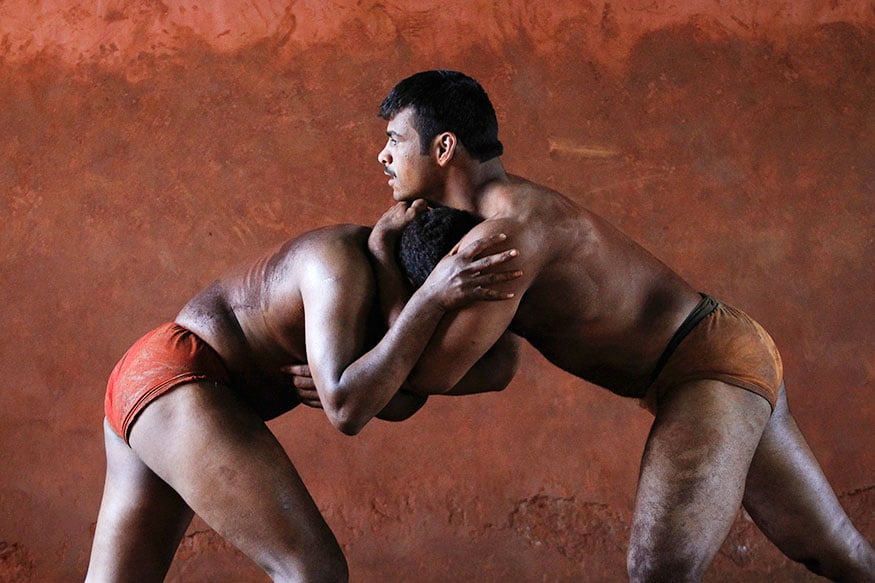
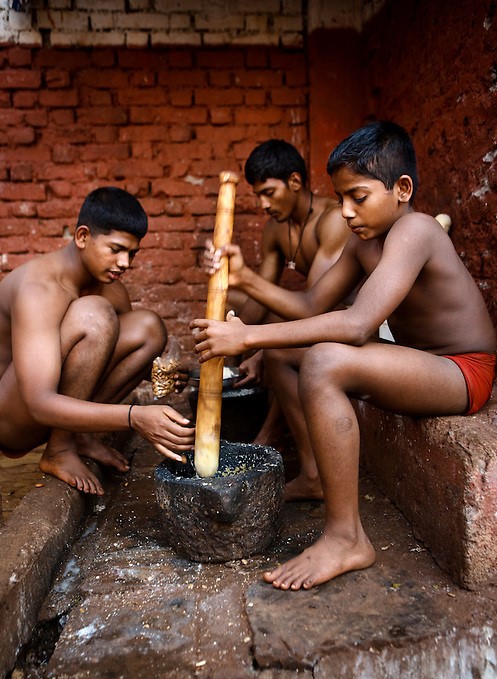
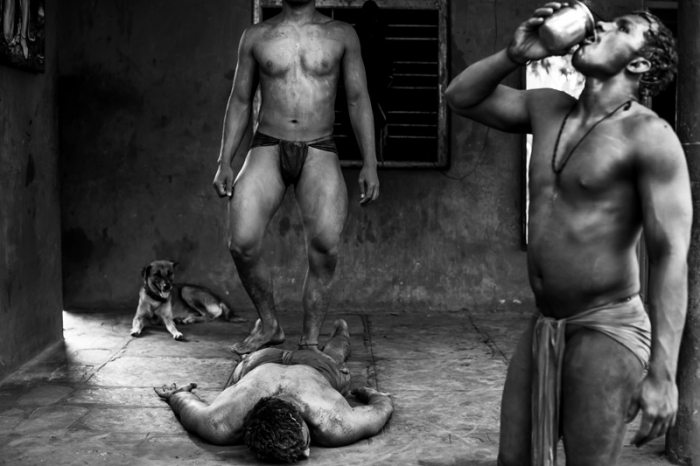
Most akharas are associated with a guru, called a palawan. This venerated teacher is a holy man who trains the wrestlers with the assistance of older wrestlers. Above you see a few typical early morning scenes in a local akhara. The small dumbbells are used for young children’s practice sessions.
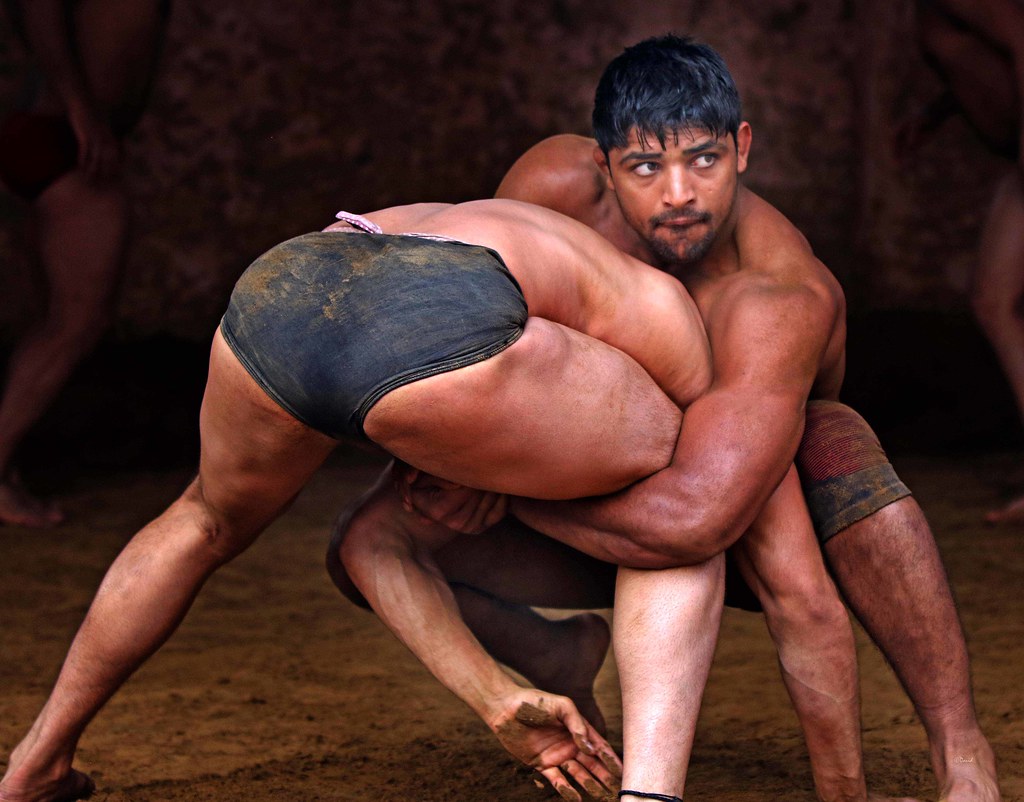
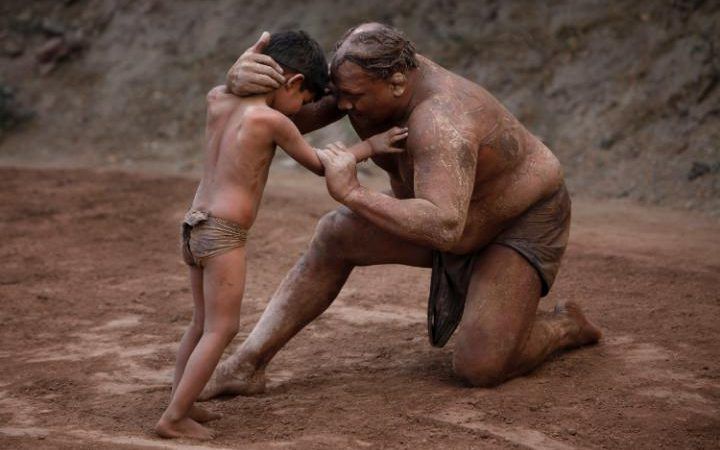
Akhara are also used as sites where the pehlwani or wrestlers train and practice their wrestling in the mud arenas called kushti, which literally translates to mean ‘wrestling ground with hallowed earth.’
Aside from intense bodybuilding, practitioners of kushti wrestling also traditionally emphasize a life of discipline and celibacy. Kusti is not just a sport and an art, it is an ancient subculture. Wrestlers live and train together and have strict rules. The palowans may not drink, smoke or have sex.
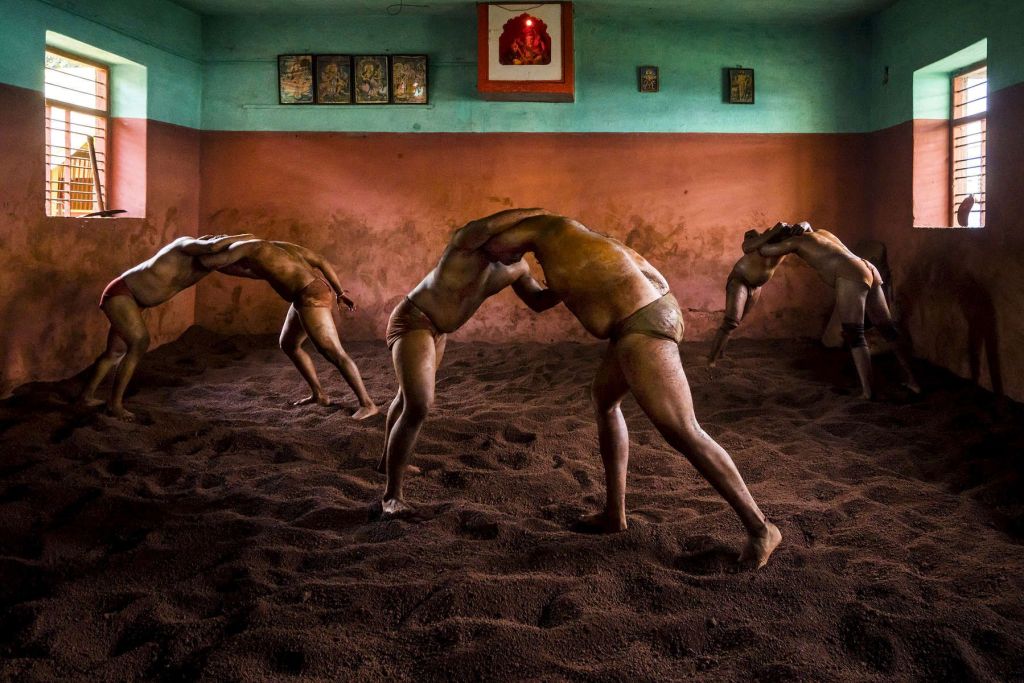
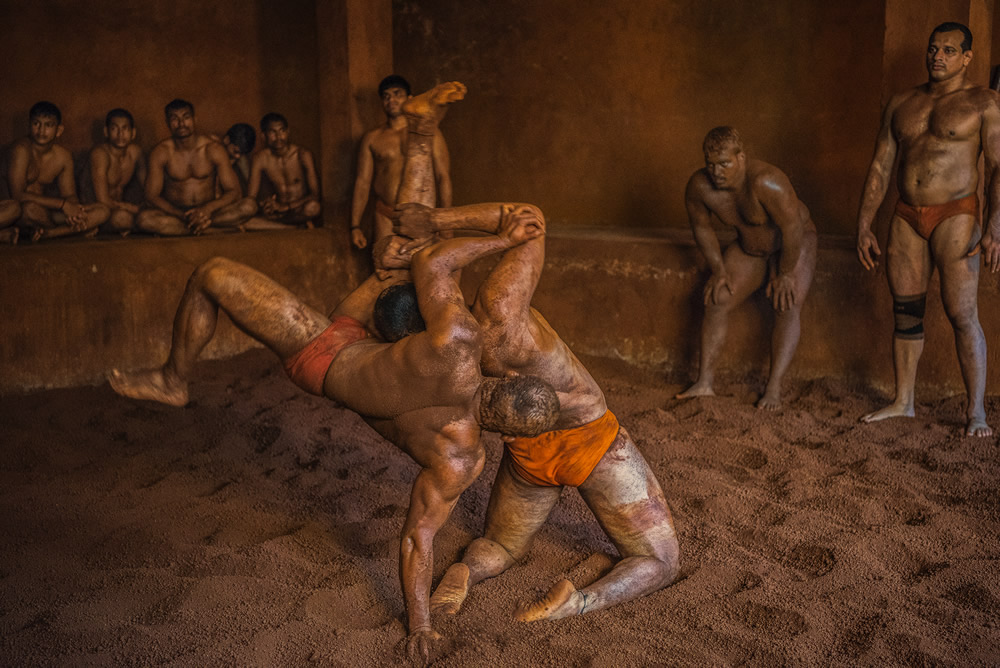
These days there are not many people practicing kushti in the traditional way, directly on mud floors, and many are more interested in practicing this form of wrestling using a mat or turf. However, despite the fact that a number of prominent, government-run gyms have already switched to mats and cater instead for Olympic-style wrestling, many of the akhara in the smaller villages and more traditional towns are still maintaining the old ways.

As a vigorous activity, wrestling has an inherently rajasic nature, which pehlwan counteract through the consumption of sattvic foods. Milk and ghee are regarded as the most sattvic of foods and, along with almonds, constitute the holy trinity of the pehlwani khurak, or diet. A common snack for pehlwan are chickpeas that have been sprouted overnight in water and seasoned with salt, pepper and lemon; the water in which the chickpeas were sprouted is also regarded as nutritious. Various articles in the Indian wrestling monthly Bharatiya Kushti have recommended the consumption of the following fruits: apples, bananas, figs, pomegranates, gooseberries, lemons, and watermelons. Orange juiceand green vegetables are also recommended for their sattvic nature. Many pehlwan eat meat due to its high protein content. Famed pehlwan Dara Singh used to eat more than a pound of meat every day.
Ideally, wrestlers are supposed to avoid sour and excessively spiced foods such as chat i and achar as well as chaat. Mild seasoning with garlic, cumin, coriander, and turmeric is acceptable. The consumption of alcohol, tobacco, and paan is strongly discouraged.
It has been said that most of the moves found in the wrestling forms of other countries are present in kushti, and some are unique to the Indian subcontinent. These are primarily locks, throws, pins, and submission holds. Unlike its ancient ancestor malla-yuddha, kushti does not permit strikes or kicks during a match. Among the most favoured maneuvres are the dhobi paat and the kasauta. Other moves include the baharli, dhak, machli gota and the multani.

 SPINBOY